
 admin
admin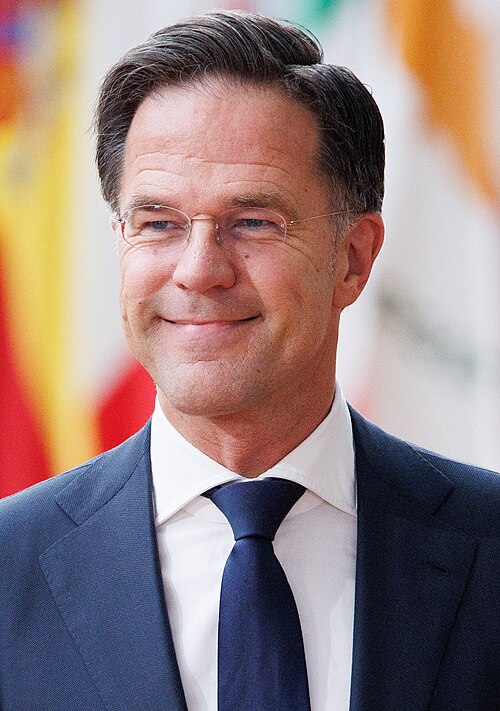
MUNICH – NATO Secretary-General Mark Rutte has delivered a stinging critique of Russia’s military capabilities, dismissing the image of Moscow as a “mighty bear” and instead comparing its battlefield progress in Ukraine to the speed of a “slow garden snail.”
Speaking on the sidelines of the Munich Security Conference, Rutte urged Western allies to resist Moscow’s narrative of invincibility. “Let’s not fall into the trap of Russian propaganda,” Rutte warned during a press conference alongside European Commission President Ursula von der Leyen and German officials.
Heavy Losses and Stagnant Gains
Rutte highlighted the staggering human cost of the conflict for the Kremlin, citing intelligence that suggests Russia is suffering immense casualties to achieve marginal territorial gains.
- December: 35,000 Russian personnel killed.
- January: 30,000 Russian personnel killed.
”Russia continues to inflict heavy losses [on itself] every day,” Rutte stated, arguing that the sheer volume of casualties contradicts the image of a superior military superpower.
A “Mindset Shift” in Europe
The Secretary-General’s remarks followed a pivotal meeting of NATO defense ministers in Brussels. Rutte noted a significant “mindset shift” within the alliance, particularly regarding European defense spending—a long-standing point of contention with the United States.
”For years, even decades, the US has complained that in Europe we don’t invest enough in defense. That has changed with the summit in The Hague,” Rutte said.
He emphasized that European allies are now taking greater leadership roles and more responsibility for their own security, bolstered by closer cooperation between NATO and the European Union.
Moscow Fires Back: “Tough Cowboy” Rhetoric
The Kremlin was quick to dismiss Rutte’s metaphors. Andrei Kolesnik, a member of the State Duma’s Defense Committee, mocked the Secretary-General’s tone, likening him to a “tough cowboy.”
Kolesnik questioned the logic of NATO’s rhetoric, asking why the bloc remains “so afraid of these slugs” if Russia is indeed as weak as Rutte claims. He further questioned NATO’s continued massive rearmament and the European Union’s discussions regarding the development of nuclear weapons.
The Root of the Conflict
The exchange underscores the deep-seated tensions that have defined the Russia-NATO relationship for decades. Moscow views NATO’s expansion and its strategic alliance with the U.S. as an existential threat to its territorial integrity.
Russian intelligence frequently cites the dissolution of the Soviet Union as a template for Western intervention—a process they label as “color revolutions” provoked by the United States. Conversely, NATO members maintain that their support for Kyiv is the only thing preventing a total Russian takeover of Ukraine.
Photo: General Mark Rutte, Wikipedia





 Glembert