admin
admin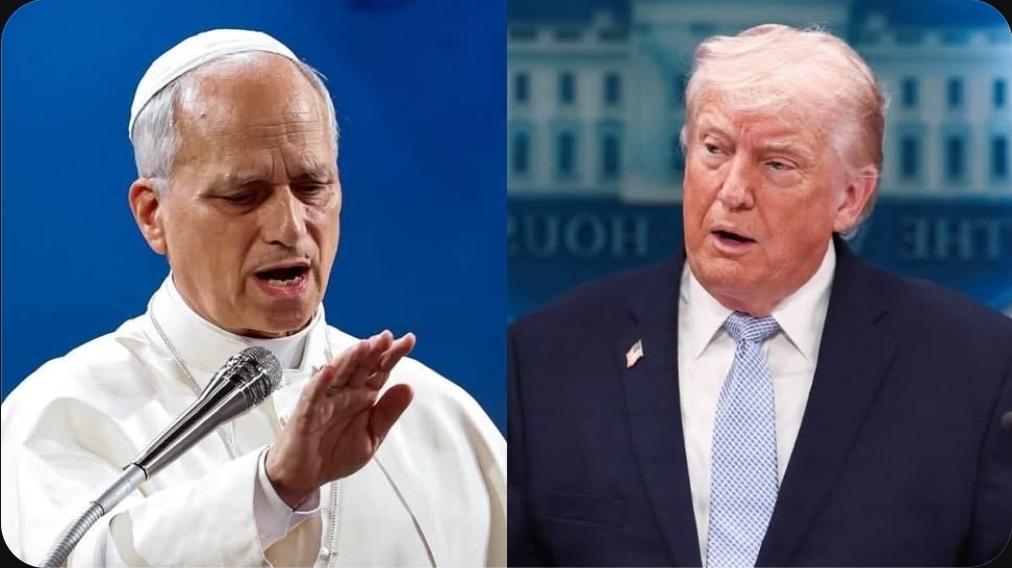
KN-NEWYORK, Relations between the United States and the Vatican have been tense since early 2026 amid the conflict in the Middle East. This tension was fueled by criticism from Pope Leo XIV, the first American-born pope, who continued to condemn war and reject the use of religion to legitimize violence. This criticism prompted a response from President Donald Trump, the Department of Defense, and political figures and the Catholic Church in the United States.
France 24 reported that Trump said he was not a big fan of Pope Leo. Trump criticized the Vatican’s stance on Iran. “He’s very liberal and weak on crime and bad on foreign policy,” Trump said on Sunday, April 12, 2026.
A day later, Pope Leo responded to the statement by saying he did not want to debate with Trump. However, the Pope emphasized that he would continue to speak out. “I will continue to speak out strongly against war, promoting peace, dialogue, and multilateral relations to find just solutions,” Pope Leo said on Monday, April 13, 2026.
Pope Leo added that too many people are suffering in the world today and too many innocent people are being killed. “Someone has to stand up and say there’s a better way,” he said.
Tension between the Vatican and Trump is not a new conflict. Vatican-Trump tensions began to surface in January 2026. According to a report by The Free Press, on January 22, 2026, Undersecretary of Defense for Policy Elbridge Colby summoned the Vatican’s Ambassador to the United States, Cardinal Christophe Pierre, for a closed-door meeting.
In that meeting, Colby reportedly asserted the United States’ global military power and pushed for a closer alignment with Washington’s strategic position.
The report also mentioned that Colby cited the Avignon Papacy (1309-1376), when the French monarchy influenced the Church, as a historical comparison.
In fact, as reported by The Hill, Colby stated that the United States military has the power to do whatever it wants and that the Church should take its side.
The Pentagon denied the report. A Department of Defense spokesperson called the narrative exaggerated and distorted, and asserted that the meeting was cordial, substantive, and professional.
Cardinal Pierre, in a statement quoted by U.S. Ambassador to the Holy See Brian Burch, also called the report a complete fabrication.
Tensions continued in February 2026. The Vatican declined the White House invitation and instead scheduled a visit to Lampedusa, southern Italy, for July 4, 2026.
Foto: Threads


 Glembert