Glembert
KN. The evolution of regional conflict since the October 7, 2023, Hamas attack on Israel has moved Iran’s nuclear program back to the top of debate between U.S. and Israeli leaders over options to address the threat from Iran. U.S. leaders at one time thought they had largely resolved the issue of Iran’s nuclear advances by achieving a 2015 multilateral agreement with Iran limiting its program – the JCPOA. During 2015-2018, the UN Security Council-backed agreement seemed to be accomplishing its objectives. The International Atomic Energy Agency (IAEA), in fact, determined Iran was fully complying with the accord. However, Israeli leaders never considered the Iran nuclear issue “closed,” insisting Iran intended to develop a nuclear weapon after the major limitations of the pact fully expired in 2025. At no time did Israeli officials drop their claim that an Iranian nuclear weapon constituted an “existential threat” to Israel.
Even though U.S. secondary sanctions on virtually every sector of Iran’s economy were reinstated when the Trump administration withdrew from the accord in May 2018, Iran’s nuclear program has since advanced to the point where Iran might have less than a year to construct a deliverable nuclear weapon, if there were a leadership decision to do so. Iran has a sufficient stockpile of 60 percent enriched uranium to produce enough fissile material for three or four nuclear weapons if it inputs a modest amount of work to enrich the material to the 90 percent purity that is considered “weapons grade.” U.S. intelligence leaders, in open testimony to the U.S. Congress, have stated that Iran has not revived efforts, suspended in 2003, to develop the detonation mechanism technology that would be needed to complete a nuclear device.
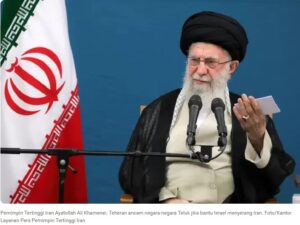
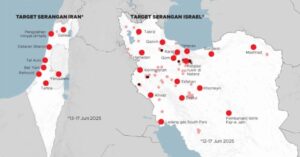
The October 7 Hamas attack, coupled with Iran’s missile barrages against Israel on April 13 and October 1, 2024, have heightened Israel’s concerns about Iran’s nuclear program advancement. In the aftermath of the October 1 strikes, Israel’s leadership has been debating whether Israel’s retaliation should target key nuclear program sites. One day after Iran’s latest missile volley, former Israeli Prime Minister Naftali Bennett, who served in that role from June 2021 until Netanyahu’s return to power one year later, wrote in an English-language post on X (Twitter): “Israel has now its greatest opportunity in 50 years, to change the face of the Middle East…We must act NOW to destroy Iran’s nuclear program, its central energy facilities, and to fatally cripple this terrorist regime.”
U.S. President Joe Biden and senior U.S. officials have publicly and privately, in discussions with their Israeli counterparts, opposed an Israeli strike on Iran’s nuclear facilities. Biden, when asked by reporters whether he would support Israel’s striking Iranian nuclear sites, stated: “The answer is no.” Targeting Iran’s controversial nuclear program is seen as perhaps the most provocative action that Israel could take and would, in the view of U.S. leaders, further enflame the conflict that has come to engulf the region. U.S. officials perceive that a strike on Iran’s nuclear facilities would provoke a massive missile and drone retaliatory attack not only by Iran but also by its regional allies, including Hezbollah, the Houthi movement in Yemen, and pro-Iranian militias in Iraq and Syria. The Iran-led response might be directed not only at Israel but against U.S. forces based in the region and perhaps against U.S. partners in the Persian Gulf and the broader Arab world.
U.S. officials argue that only a diplomatic solution would verifiably ensure that Iran does not produce nuclear arms. Experts have long argued that military action would only delay, not prevent, Iran from acquiring a nuclear weapon. A 2010 Israeli and U.S. cyber-attack on Iran’s centrifuge array destroyed about 1,000 of the devices but only set back Iran’s overall uranium enrichment effort by a maximum of two years. U.S. officials in both parties assert that, under some circumstances, the major provisions of the JCPOA could still be revived in talks with Iran. Iran is a party to the Nuclear Non-Proliferation Treaty (NPT), and the U.S. and its European partners assert that Iran’s nuclear program be monitored and controlled in that context, with the intent to prevent Iran from a “breakout” to a nuclear weapon. An Israeli attack on Iran’s nuclear sites would almost certainly prompt Iran’s leaders to withdraw from the NPT entirely, expel all IAEA inspectors, and dismantle their monitoring equipment at declared nuclear sites, leaving the international community devoid of information on Iran’s nuclear activities.
Weighing perhaps even more heavily is the assessment among U.S. and global experts that Israel does not have the military capacity to destroy Iran’s nuclear infrastructure. Even with no additional weaponry or help from U.S. forces, experts widely believe Israel could destroy Iran’s Natanz nuclear enrichment plant, a large site that is buried about three stories into the desert north of the city of Esfahan. A heavy-water nuclear reactor at Arak, which was gutted by Iran in accordance with the JCPOA and is still apparently inactive but is undergoing a redesign to meet JCPOA and International Atomic Energy Agency (IAEA) requirements, also is vulnerable to destruction by Israel.
Much of the global skepticism about the likely effectiveness of an Israeli strike centers around the uranium enrichment site at Fordow, which is built deep into a mountain. The JCPOA did not require the Fordow site to be dismantled but mandated that uranium enrichment there cease. Since the U.S. withdrawal from the accord, Iran resumed enrichment activities at the site, which has been used to produce Iran’s stockpile of 60 percent enriched uranium (the closest it has to weapons grade, at this time). The George W. Bush administration, during which Israel first began training and planning for a potential assault on Iranian nuclear facilities, refused Israeli demands to supply it with the United States’ biggest bunker-busting bombs – estimated at 30,000 pounds – and the B-2 bombers that are needed to deliver them. Those weapons would be essential to any effort to take out Fordow and other deep, heavily reinforced facilities. For comparison, Israel used U.S.-supplied 2,000-pound bunker busters to destroy the compound where Hezbollah Secretary General Hassan Nasrallah was meeting with his associates in late September.
Furthermore, the heavy munitions needed to destroy even partly buried nuclear sites complicate the ability to hit sites more than 1,000 miles from Israel. The Israeli Air Force relies on an aging fleet of Boeing 707 aerial refueling planes, and it will be years before newer models, capable of carrying fuel for far longer ranges, are delivered by the United States.
Because of Israel’s military limitations, experts have postulated that a unilateral Israeli attack would intend to set the stage for a U.S. follow-on attack to destroy Fordow and any other nuclear targets Israel could not. U.S. officials agree that a failed or only partially successful Israeli attack would probably cause Iranian leaders to rebuild damaged sites and harden them further to protect against future assaults. According to this view, U.S. forces would be compelled to intervene in order to ensure that Iran could not easily or quickly reconstitute its program. But, even a major U.S. attack would not eliminate the nuclear expertise Iran has acquired and would not represent a permanent solution to the potential threat of a nuclear-armed Iran.
Yet, in the context of the regional conflict between Israel and Iran and its allies, Israel’s security establishment would likely decide to undertake the assault if: Iran revives its work on a nuclear explosive device; or enriches uranium to the weapons-grade level of 90 percent purity. Israeli leaders consider an Iranian nuclear weapon as too extreme a threat to delegate a solution to U.S. diplomacy, sanctions, or other policy tools. It is likely that the issue of potential military action against Iran’s nuclear infrastructure will divide U.S. and Israeli leaders in the coming months and years.


 admin
admin