Glembert
KN. US. President Donald Trump was imposed a 25% tariff on all steel and aluminum imports into the United States with no exceptions or exemptions. Although the United States gets most of its steel from Canada, Brazil and Mexico, the tariffs are largely aimed at China.
Trump also announced plans to introduce similar tariffs on cars, semiconductor chips, and pharmaceutical products. He stated that he would consider Australia’s request for an exemption. Trump expressed no concern about potential retaliation, asserting that if other nations raised tariffs, the United States would promptly respond in kind.
Australian Business Ambassador to Indonesia Jennifer Westacott said Indonesia and Australia need to work together to deal with the latest developments in Trump’s policy that applies to all steel and aluminum imports. Regardless of the ability to negotiate with Trump, Westacott emphasized the importance of increasing two-way economic and investment cooperation between Indonesia and Australia.
Nicholas Spiro, Partner at Lauressa Advisory said the onslaught of protectionism has begun. Three weeks after the start of US President Donald Trump’s second term, it is clear that his administration’s trade aggression will prove far more damaging than many Wall Street analysts predicted.
While the imposition of tariffs of 25 per cent on most goods from Canada and Mexico was delayed by a month, an additional 10 per cent levy on Chinese imports was maintained, sparking retaliation from Beijing. On February 9, Trump said he would impose 25 per cent tariffs on all steel and aluminium imports, intensifying his trade offensive.
Energy and Mineral Resources Minister Bahlil Lahadalia said that Donald Trump’s return to the U.S. presidency changed the world’s focus regarding energy transition. He said that previously almost all countries were talking about green energy.
“But once Mr. Trump became U.S. President, all of this stopped. All of this stopped. We believed coal had reached its end, but ‘this thing is alive again’,” he said. Bahlil emphasized that the latest dynamics do not change Indonesia’s commitment to the Paris Agreement. However, the government needs to look at the priority scale while still considering using coal-fired power plants.
Indonesia is seeking to diversify its markets as global protectionism intensifies while also taking steps to defend its local manufacturers, Trade Deputy Minister Dyah Roro Esti Widya Putri said. “Trump’s statements on tariffs are quite shocking in a lot of ways, but we think Indonesia could maximize its market potential if the U.S. imposes tariffs on Chinese goods,” Roro said in an interview in Jakarta. “We are safeguarding our national trade, while expanding exports.”
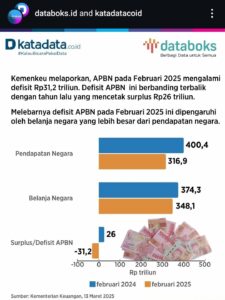
Statistics Indonesia (BPS) reported a trade balance surplus in January 2025 reaching $3.45 billion, supported by Indonesia’s trade with the United States reaching $1.58 billion. In general, Indonesia’s trade balance surplus in January 2025 was formed from the realization of exports worth $21.45 billion, while imports of goods were worth $18 billion. Meanwhile, Indonesia’s trade deficit with China reached $1.77 billion.
Chairman of the National Economic Council (DEN) Luhut Binsar Pandjaitan said Trump’s market protectionism policy is an opportunity for Indonesia. He noted that Indonesia has the potential to increase its GDP by 0.8 percent, emphasizing the need for Indonesia to reposition itself in the global market and enhance foreign investment realization by facilitating a more business-friendly environment.

National Economic Council (DEN) Chair and President’s Special Advisor Luhut Binsar Pandjaitan said that President Donald Trump’s market protectionism policy is an opportunity for Indonesia to increase its percentage of GDP income. Luhut said that his party believes that this policy will increase Indonesia’s GDP by up to 0.8 percent.
Economic Affairs Coordinating Minister Airlangga Hartarto said the trade war between the United States and China has not disrupted Indonesian trade to date. He said the U.S. President Trump’s threat of a 100 percent tariff on BRICS countries does not yet apply to Indonesia. Currently, said Airlangga, Indonesia is still subject to a 10 to 20 percent tariff because it does not yet have a trade agreement with the United States.

Coordinating Minister for the Economy Airlangga Hartarto said Indonesia will continue to face import duties ranging from 10 to 20 percent, but affirmed that there has been no immediate disruption to the trade sector following Trump’s increase in import tariffs. He expressed hope that Indonesian trade will be resilient in the face of current geopolitical uncertainties.


 admin
admin