Glembert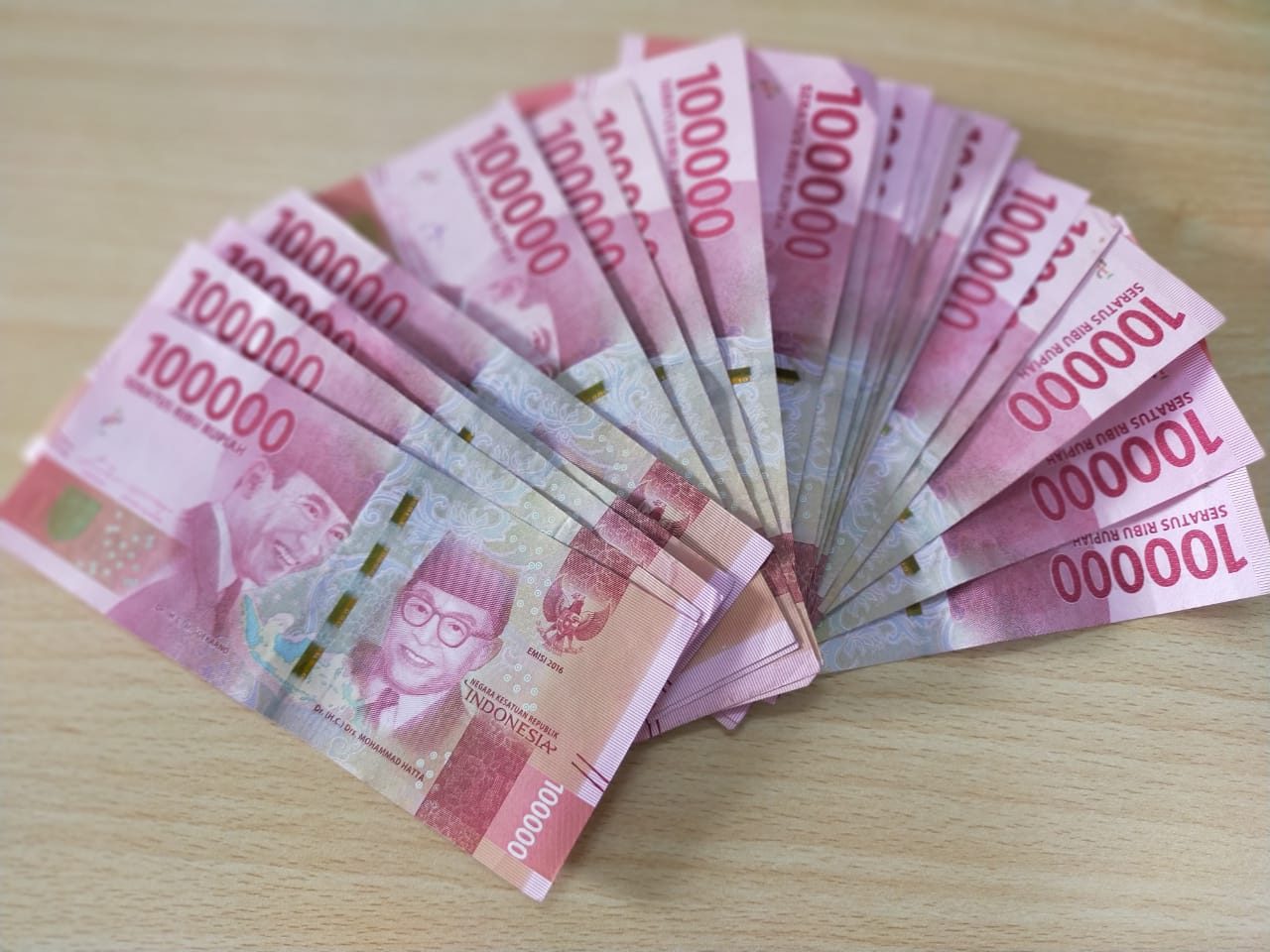
KN. The rupiah exchange rate plummeted, breaching IDR17,500 per U.S. dollar during intraday trading. This marked a 0.37 percent depreciation for the rupiah compared to the previous day’s close of IDR17,414 per U.S. dollar. It ultimately settled at IDR17,508 per U.S. dollar, marking the rupiah’s weakest level. Economist Ferry Latuhihin stated that the global price of oil is one of the primary factors weighing on the rupiah.
Economic Affairs Coordinating Minister Airlangga Hartarto said the currency’s decline reflects a broader trend affecting many countries, especially emerging markets. He said the government will continue to monitor the rupiah, which has crossed IDR17,000 per U.S. dollar, amid ongoing global pressures.
Economic Affairs Coordinating Minister Airlangga Hartarto said that the rupiah’s depreciation to IDR17,424 per U.S. dollar was driven by several factors, including rising demand for U.S. dollars ahead of the hajj season and dividend payment needs in the second quarter of 2026. To ease pressure on the U.S. dollar and maintain rupiah stability, the government and Bank Indonesia have prepared several anticipatory measures, including expanding currency swap cooperation with multiple countries. Airlangga said that Indonesia has already established a currency swap arrangement with China and is exploring similar cooperation opportunities with Japan, South Korea, and other countries.
Indonesia’s economy is approaching a dangerous crossroads. While Finance Minister Purbaya Yudhi Sadewa projects robust 5.5 percent growth, he has also warned that the country is in “survival mode” amid escalating global tensions. Beneath the headline optimism, rising energy prices, weakening purchasing power and mounting fiscal and monetary pressures are exposing deeper structural cracks, raising a critical question: Can Indonesia withstand the shock, or is its resilience beginning to wear thin?
Global credit rating agencies Moody’s and Fitch Ratings have revised Indonesia’s outlook to negative, along with the outlooks for four major banks, Bank Mandiri, Bank Central Asia, Bank Negara Indonesia and Bank Rakyat Indonesia, despite their solid liquidity and profitability. In their assessments, both agencies highlighted rising policy uncertainty and Indonesia’s growing economic vulnerability amid the escalating conflict in the Gulf.
Indonesia’s government debt stood at $571 billion as of March 31, the Finance Ministry said in a statement, with the vast majority financed through state securities issuance. Of that amount, $498 billion, or 87.22 percent of total debt, consisted of state securities, while direct loans accounted for the remaining $73 billion. Finance Minister Purbaya Yudhi Sadewa stated that Indonesia’s debt ratio is around 40 percent of GDP, well below the statutory ceiling, and compared favorably with regional peers. He added that the 2026 state budget deficit is expected to remain within limits, with borrowing levels still under control.
Economic Affairs Coordinating Minister Airlangga Hartarto said after meeting President Prabowo that Indonesia’s economy grew 5.61 percent year-on-year in the first quarter of 2026. He said the figure marks the highest growth among G20 countries, exceeding China, Singapore, and the United States. Finance Minister Purbaya Yudhi Sadewa called the result a strong achievement despite global economic volatility and pressure. He said the growth shows Indonesia has moved past the long-standing pattern of staying below the 5.5 percent threshold.
Indonesia will require natural resource exporters to place export proceeds (DHE SDA) in state-owned banks and convert up to 50 percent of the funds into rupiah starting June 1, under revised government regulations aimed at strengthening domestic foreign exchange liquidity and stabilizing the rupiah. The government said the oil and gas sector will continue following the existing rule requiring export proceeds to remain in the domestic financial system for three months.
President Prabowo instructed officials to strengthen Indonesia’s economic fundamentals to safeguard financial market stability against global pressures and U.S. Federal Reserve policies. Financial Services Authority Chair Friderica Widyasari Dewi said recent capital outflows were driven by global conditions.
While Indonesia’s headline GDP suggests an economic triumph, a deeper look at GNP reveals a hollow growth, where wealth flows outward rather than into households. The country’s impressive statistics are failing to move the needle for the middle class and the informal workers who anchor the economy. Indonesia’s economy grew at a steady 5.2 percent through 2025 and into early 2026. On paper, that is a success story. Yet in practice, millions of Indonesians aren’t buying it, because they aren’t feeling it. Household budgets remain tight, the middle class has stopped expanding, and a quiet frustration is building between what the macroeconomic data says and what people actually experience at the market, at the fuel pump and at the end of the month.
Regional leaders across the country are rushing to roll out a new wave of local taxes, from levies on electric vehicles to surface water charges on oil palm plantations, in a bid to shore up their revenue streams. But without careful planning and clear communication, as recent unrest in East Kalimantan and Pati, Central Java, has shown, excessive taxation policies can quickly spark public anger and escalate into social turmoil. The fiscal anxiety stems from President Prabowo Subianto’s budget strategy, which has sharply reduced regional transfer funds from the central government to regional governments to make room for his flagship programs such as free nutritious meals and the Red and White Cooperatives initiative. Many regions, particularly those with weak local revenue bases and heavy reliance on central government support, are now sounding the alarm. With their budgets squeezed, regional leaders fear they may be unable to deliver on campaign promises or even meet basic obligations such as paying civil servants’ salaries.


 admin
admin