
 admin
admin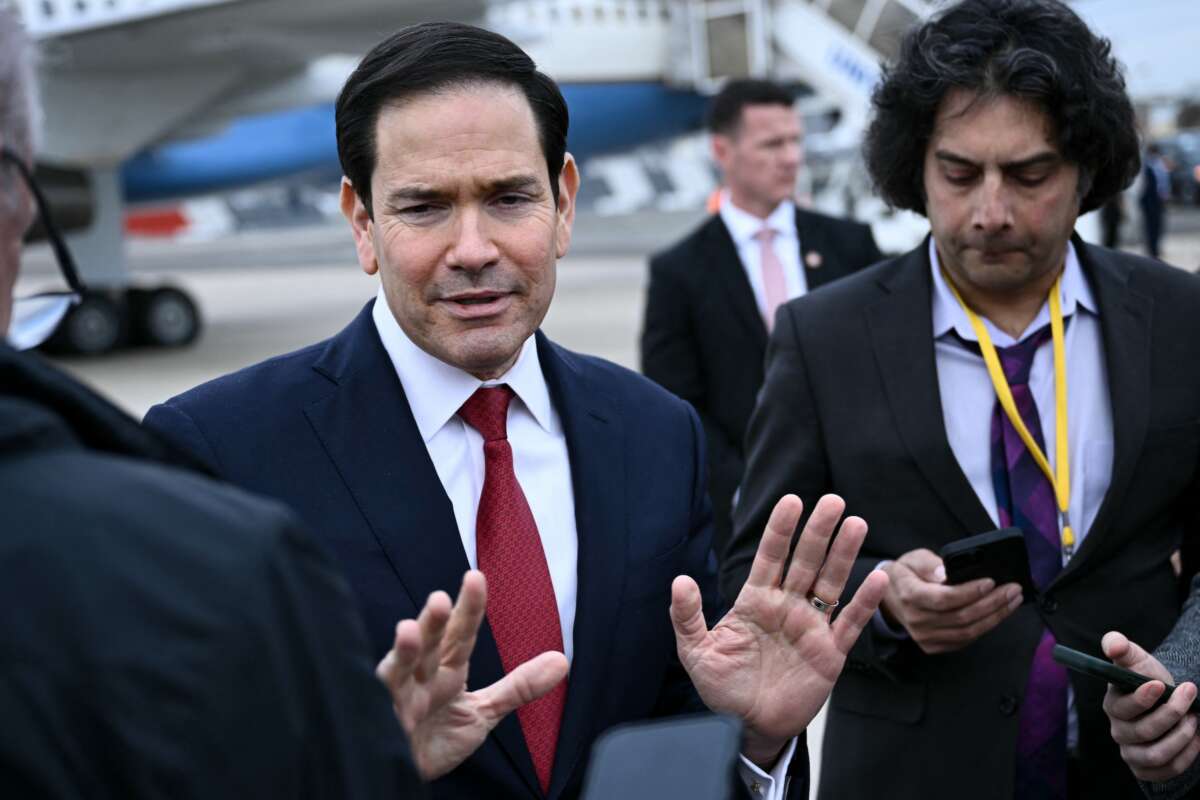
KN-NEWYORK, U.S. Secretary of State Marco Rubio delivered a deliberately calibrated address that marked a clear shift in tone from the U.S. message articulated the previous year by Vice President JD Vance. Speaking at a time of heightened transatlantic tensions, Rubio emphasized unity, shared interests, and the enduring importance of the alliance. At the same time, he pressed European partners on burden-sharing, migration, differences on climate change, international institutions, and reassessment of legacy frameworks. His remarks were widely interpreted as an effort to stabilize relations and reassure allies after a period of immense strain in U.S.–European ties. Still, a speech at a global security conference is no substitute for actual policy. While Rubio’s remarks were largely positive, they are still offset by the current U.S. policy toward Europe. Moreover, after Munich, Rubio headed to Hungary, where he lavished praise on Hungarian Prime Minister Viktor Orban, a far-right politician who has consistently challenged efforts at European unity and has played the role of a spoiler in developing a common European operating picture.
Rubio’s remarks cannot be assessed in isolation; they must be seen in the context of the 2025 Munich Security Conference, where Vice President Vance broke sharply with decades of established U.S. diplomatic tradition towards Europe. Rather than emphasizing Russia or China as the principal external threats to European security, Vance argued last year that Europe’s greatest dangers were internal, specifically the erosion of free speech, democratic norms, and migration policies. For many European leaders, Vance’s remarks were received not merely as policy disagreement but as a non-normative rebuke. It directly challenged Europe’s political model and implicitly questioned the bedrock of the transatlantic partnership. The result was not simple rhetorical irritation, but deeper doubts about U.S. reliability and strategic alignment. A consistent and predictable U.S. foreign policy is essential to maintaining robust alliances. When doubt is introduced, it has a corrosive effect, harming Washington’s relationship with its allies and emboldening America’s adversaries.
Against this backdrop, Rubio delivered a markedly different speech at the 2026 Munich Security Conference. The administration’s decision to send Rubio, a figure rooted in the Washington foreign policy establishment, rather than Vice President JD Vance, signaled an intent to refine the messaging by maintaining the same core policies but delivering them through a more familiar voice and more carefully calibrate diplomatic language. Rubio attempted to tone down some of the culture-war framing that characterized Vance’s 2025 remarks but still spoke at length about the centrality of Western civilization and the importance of Western values. Many diplomats conveyed cautious relief at the less accusatory language. Yet analysts also noted that the substance of U.S. policy had not fundamentally shifted. Rubio’s intervention appeared designed to stabilize the alliance rhetorically while preserving policy leverage. European observers broadly interpreted the speech as a deliberate attempt to lower tensions, yet behind closed doors, the Europeans expressed significant concern over the Trump administration’s commitment to democracy and human rights.
The transatlantic relationship is navigating one of its most complex and demanding phases in recent memory. President Trump’s remarks at Davos about Greenland and the Article V NATO quandary over whether the U.S. would protect Europe against continued Russian aggression marked a shift in U.S. posture toward Europe since the Trump administration returned to office just over a year ago. President Trump’s statements about revisiting the prospect of acquiring Greenland shifted tensions from the ideological to the strategic domain. Greenland is under the sovereignty of Denmark, a NATO ally, and holds significant value in Arctic competition involving Russia and China. Even in the absence of formal policy steps, the symbolism of territorial pressure within the alliance triggered major alarms from Copenhagen to Riga. For European capitals, this crossed a psychological threshold: the notion that a U.S. administration might apply coercive pressure against allied sovereign territory fundamentally alters alliance assumptions that date back to the post-World War II era.
Speculation about President Trump’s pressure on Canada, another NATO member and a core Five Eyes (FVEY) partner, further eroded trust. Canada is deeply integrated with the United States economically, militarily, and through intelligence cooperation. In that context, Ottawa’s subsequent expansion of diplomatic and commercial engagement with China was widely interpreted not as realignment, but as hedging. And hedging is what states do when alliance guarantees appear less predictable.
The ripple effects were visible across Europe. French President Emmanuel Macron intensified calls for “strategic autonomy,” and German political leaders spoke more forcefully about sovereignty and the independence of the defense industry. Even the UK, historically the most Atlanticist capital, expanded discussions on economic diversification, highlighted by a high-profile prime ministerial visit to China and significant commercial announcements. The UK’s public emphasis on billions of pounds in export and investment deals during its China outreach, and Canada’s framing of a “renewed strategic partnership” with concrete market-access expectations, were not merely commercial announcements. In a period of alliance uncertainty, such moves function as geopolitical signaling and attempt to convey optionality.
A second channel of strain emerged with the Trump administration’s “Board of Peace” initiative. Several major European states declined to participate, citing concerns about governance structure, mandate clarity, and transparency. This refusal was significant. It suggested reluctance to validate ad hoc, personality-driven multilateral structures outside established alliance or UN-based frameworks. European governments clearly signaled that they would not automatically endorse new diplomatic architectures without institutional legitimacy and shared design. These visible shifts underscored that alliance uncertainty was beginning to evolve into structural recalibration. They likely prompted the administration to reassess its rhetoric, recognizing that achieving its objectives in great power competition requires the sustained support of longstanding allies.
On Russia, sustained deterrence and support for Ukraine depend on NATO unity, industrial coordination, and alignment on sanctions. On Iran, effective sanctions enforcement requires transatlantic coordination, particularly as China plays a facilitating role in energy flows and in Tehran’s economic resilience. Recent reporting also points to Chinese technology being used to enable aspects of Iran’s defensive and internal control infrastructure, another illustration of complex interdependence within the authoritarian ecosystem. On China itself, export controls, technology restrictions, and supply chain security are only effective if the United States and Europe move in concert.
The transition from Vance’s 2025 posture to Rubio’s 2026 tone reflects recognition that rhetorical escalation was producing measurable consequences, including allied hedging toward China and institutional reluctance to endorse new U.S.-led initiatives. Rubio’s speech can be understood as an effort to step back from that edge, not by reversing policy, but by restoring diplomatic equilibrium. The coming years will determine whether this moment marks a durable reset — or merely a pause in a deeper structural recalibration of the Western alliance system.






 Glembert