admin
admin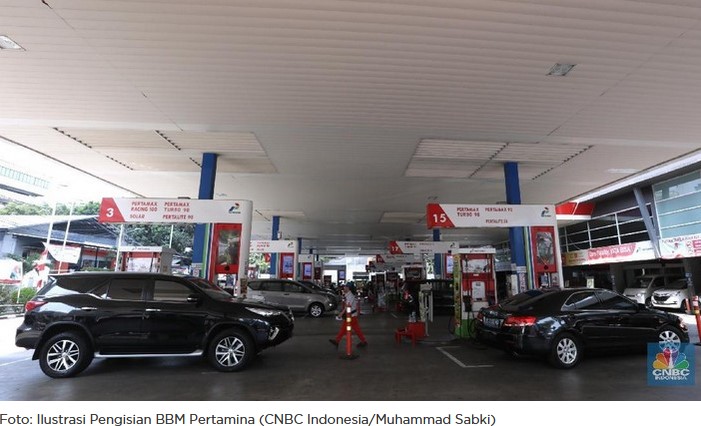
KN-PERSIAN, Pertamina is racing to secure the release of two of its tankers stuck in the Persian Gulf through diplomatic channels, as analysts warn that the recent United States–Iran ceasefire does little to guarantee safe passage through the politically charged Strait of Hormuz. The two vessels in question are the Pertamina Pride and the Gamsunoro, both owned by Pertamina International Shipping (PIS), the state-owned energy company’s shipping and logistics arm. “Together with the Foreign Affairs Ministry, PIS continues to monitor developments and discuss technical preparations to ensure the safe passage of both vessels,” acting PIS corporate secretary Vega Pita said on Wednesday. The company says its top priority remains the safety of all crew members, as well as the security of the vessels and their cargo. State Secretary Minister Prasetyo Hadi said that negotiations were ongoing to free the ships.
Two Pertamina International Shipping tankers highlight weaknesses in Indonesia’s energy diplomacy as geopolitical conflict disrupts operations. National Research and Innovation Agency (BRIN) researcher Nostalgiawan Wahyudi said Indonesia’s position in the Middle East remains unclear, noting Thailand has found it easier to engage diplomatically with Iran. He pointed to the lack of clear response from Iranian Ambassador Mohammad Boroujerdi on the stranded tankers as a sign of diplomatic uncertainty. He said perceptions of close Indonesia–Middle East ties, partly due to support for Palestine and cultural links, do not reflect actual policy priorities.
Energy and Mineral Resources Minister Bahlil Lahadalia stated that Indonesia receives liquefied petroleum gas (LPG) supplies from the United States and Australia. He noted that current national reserves are in a safe condition, with stock levels exceeding 10 days. He added that additional LPG shipments are expected to arrive soon, as vessels are currently in intensive coordination to enter Indonesia. The government emphasized that Indonesia’s LPG supply does not depend on the Strait of Hormuz, meaning it is not directly affected by geopolitical dynamics in the region. Indonesia sources its LPG from multiple partner countries.
Iran’s blockade of the Strait of Hormuz has disrupted global energy supplies and sent oil prices sharply upward. For Indonesia, this serves as both a wake-up call and an opportunity to reduce its vulnerability to external shocks and strengthen long-term energy security.
The Strait of Hormuz carries roughly a quarter of global seaborne crude oil and petroleum product trade, as well as around a fifth of the global liquefied natural gas (LNG) trade. More than 80 percent of these energy commodities ultimately flow to Asian markets. Any disruption along this route immediately raises the risk of supply shortages and price spikes across the region. Several countries, including India, China, Pakistan and the Philippines, have already adopted emergency measures ranging from restrictions on fuel and LPG purchases to shorter working weeks and work-from-home arrangements. Brent crude, which traded at around US$70 per barrel before the United States-Israeli war on Iran, has surged past $100. Fuel prices have climbed in many countries.
Photo: CNBC Indonesia/Muhammad Sabki


 Glembert