Glembert
KN. Economic Affairs Coordinating Minister Airlangga Hartarto announced Monday that he will lead a high-level delegation for talks with the Trump administration from April 16 to 23 on the recently imposed tariff hikes on Indonesian goods. The meetings will include discussions with the U.S. Trade Representative, the Secretaries of Commerce, State, and the Treasury, under the direct instruction of President Prabowo.
FM Sugiono departed for Washington, D.C., on Monday to prepare for the negotiation process, while Airlangga and National Economic Council (DEN) Deputy Chair Mari Elka Pangestu will fly to the United States on Tuesday. Finance Minister Sri Mulyani Indrawati and Finance Deputy Minister Thomas Djiwandono will also travel to the United States to help with the negotiations.
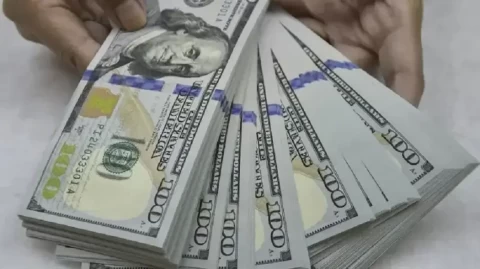
Airlangga said Monday that as part of Indonesia’s offer, the country will purchase U.S. products worth $19 billion (approximately IDR318.9 trillion) to avoid import tariff attacks. Airlangga explained that there are several other offers from Indonesia, such as plans for Indonesian companies to invest in the United States. Investment and Downstreaming Deputy Minister Todotua Pasaribu explained that these investments will be carried out through the sovereign wealth fund Danantara.
Airlangga Hartarto said Indonesia has the opportunity to be the first country to be invited to Washington, D.C., to negotiate on U.S. reciprocal tariffs. Airlangga said the reduction in import income tax rates and import duties would apply to all products, not just those from the United States, as previously said by the Finance Ministry.
Investment in oil and gas could be a potential entry point for Indonesian companies in the United States, according to Investment and Downstreaming Deputy Minister Todotua Pasaribu, with a number of state-owned companies having experience investing abroad. The information technology sector is also on the radar for potential investment.
U.S. tariffs on imports from Indonesia could put more workers at risk of layoffs, economists have warned, adding that an increase in unemployment could also lead to the expansion of the local informal sector, which could hinder economic growth in the long term. The Confederation of Indonesian Trade Unions (KSPI) said on April 9, that tariffs would drive up the price of Indonesian goods in the U.S. market, making them less competitive with goods from other countries.
House Commission VI member Darmadi Durianto said Monday that the Indonesian government’s trade negotiations with the United States must prioritize guaranteeing that labor-intensive industries do not face export barriers and tariff increases, thereby avoiding layoffs. The textile and textile product industries, as well as the furniture industry, are among those that employ a large number of people.
Tenggara Strategics analized said during the first trade war, Indonesia gained from trade diversion and increased FDI as companies looked to relocate from China. The current situation is more complex. Higher tariffs on Indonesian goods limit its ability to act as a substitute for Chinese products and reduce the likelihood of benefiting from China’s outbound FDI.
Additionally, a global slowdown triggered by ongoing trade tensions could dampen demand for Indonesian exports. To mitigate the impact and turn adversity into opportunity, Indonesia could fast-track trade agreements such as the Indonesia-EU Comprehensive Economic Partnership Agreement (CEPA) and its accession to the OECD while optimizing the RCEP framework. Preferential trade agreements with the United States may also be worth exploring. Furthermore, Indonesia could deepen its economic integration with ASEAN neighbors and push forward domestic economic reforms to improve the business climate.
According to a study conducted by the U.S. Trade Representative Office (USTR), Indonesia is thought to be impeding trade through import quota policies, imports based on commodity balances, and import assignments for several commodities by government agencies, including state logistics agency Bulog. If import quotas are dropped, the government must make additional efforts to protect farmers from food price pressures so that farmers’ welfare does not deteriorate further and the hard work to achieve self-sufficiency is fully achieved.
According to South China Morning Post, Indonesia should rethink its strategy of relaxing imports and local content rules to appease Washington, as it could weaken its domestic industry, observers have said ahead of high-stakes trade talks at the White House this week. Andri Satrio Nugroho, an economist at the Jakarta-based Institute for Development of Economics and Finance, warned that relaxing import controls could undermine Prabowo’s push for food and energy self-sufficiency.


 admin
admin