Glembert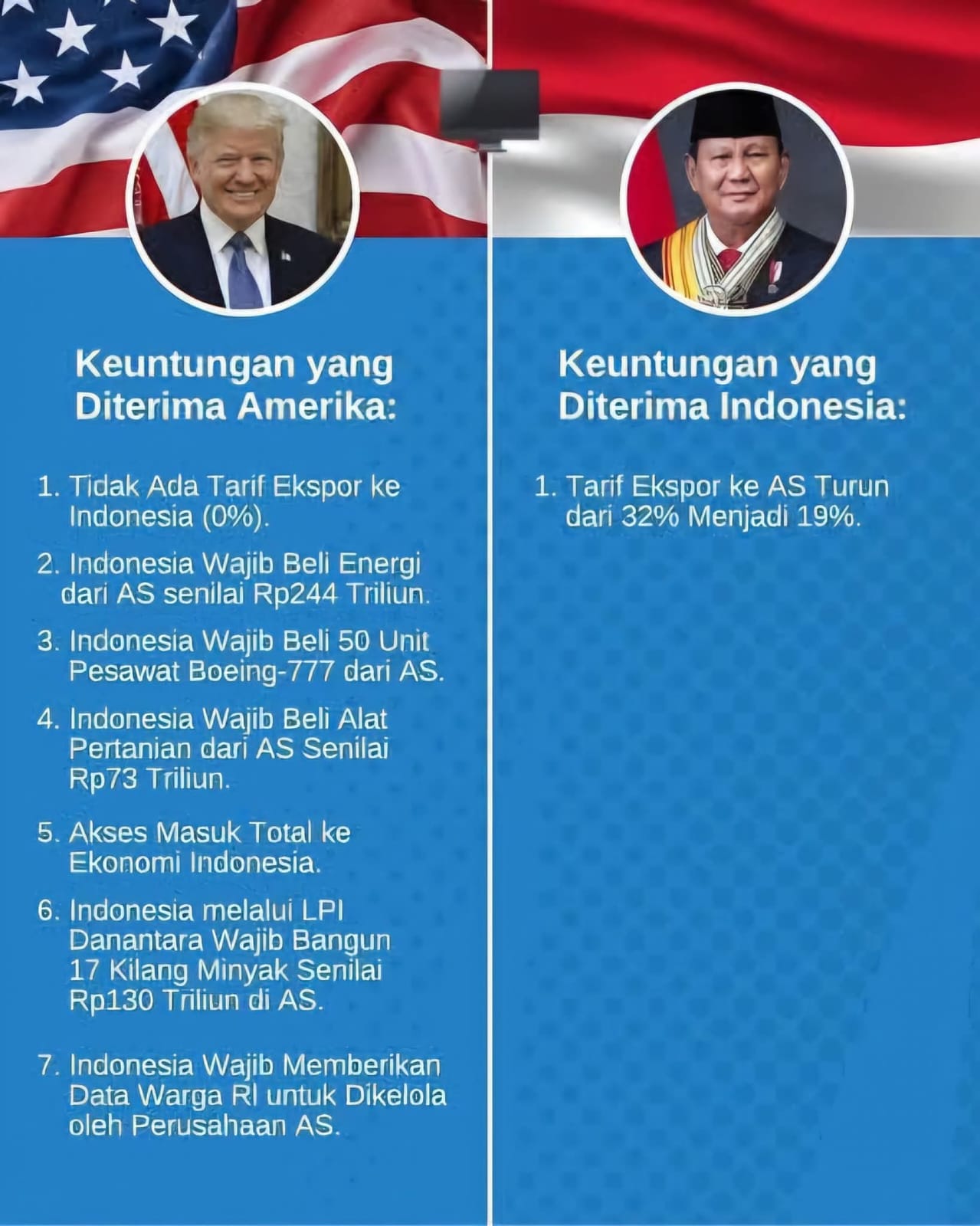
KN. Foreign Minister Sugiono said President Prabowo is expected to meet with U.S. President Donald Trump in the near future. The high-level meeting is likely to take place in the United States, either in Washington D.C. or at Trump’s Mar-a-Lago residence in Florida. “One of the main agendas is the signing of the tariff agreement between Indonesia and the United States,” Sugiono said..
However, the meeting has not yet been scheduled, as both leaders’ calendars are being coordinated. Sugiono emphasized that the timing of the visit depends on aligning the schedules of Prabowo and Trump. In addition to the trade agreement, the two leaders are expected to discuss Indonesia’s role in the Board of Peace, an initiative launched by President Trump. Sugiono said Indonesia is coordinating closely with other Muslim-majority countries in the Board of Peace, including Saudi Arabia, Turkey, Egypt, Jordan, Pakistan, Qatar, and the United Arab Emirates.
Coordinating Economy Minister Airlangga Hartarto says all negotiation points on a tariff deal with the United States have been agreed between the two sides, and all that is left is signing by the respective presidents. Airlangga told reporters that the negotiations on reciprocal tariffs are complete, and the legal drafting progress for the Agreement on Reciprocal Trade (ART) had reached 90 percent. Airlangga said he could not reveal the contents of the agreement until the documents were signed by President Prabowo and President Trump, as the two countries were bound by a nondisclosure agreement.
Economic Affairs Coordinating Minister Airlangga Hartarto said Indonesia and the United States continue to strengthen economic ties, particularly in agriculture. As part of the reciprocal trade agreement negotiations to balance the trade balance, Indonesia has committed to increasing purchases of U.S. agricultural products, especially for domestic industrial raw materials, such as soybeans, soybean meal, wheat, cotton, and corn, which are needed by Indonesian industries and not yet produced domestically.
Airlangga said he welcomed recent discussions with the U.S. Department of Agriculture this week, noting that Indonesia is targeting agricultural purchases worth about USD 4.5 billion while also encouraging U.S. investment that brings capital and technology.
Indonesia expects to secure preferential access to the United States market below the proposed 19 per cent reciprocal tariff, following the conclusion of trade negotiations between the two countries. Indonesia’s Presidential Special Envoy for International Trade and Multilateral Cooperation Mari Pangestu, the deal reflects a more balanced approach to trade and investment ties, allowing Indonesia to gain greater access to the U.S. market while addressing long-standing concerns over trade imbalances.
“Some of the issues that we had to try to deal with in the negotiations was to make sure there’s balance, that it was not just unilateral,” she said. “That’s been, I think, somewhat achieved. So, it’s not just us giving market access and agreeing to purchase U.S. goods, which is to address the issue of the deficit, but to also get market access to the U.S. for the products that are important to us.”


 admin
admin