admin
admin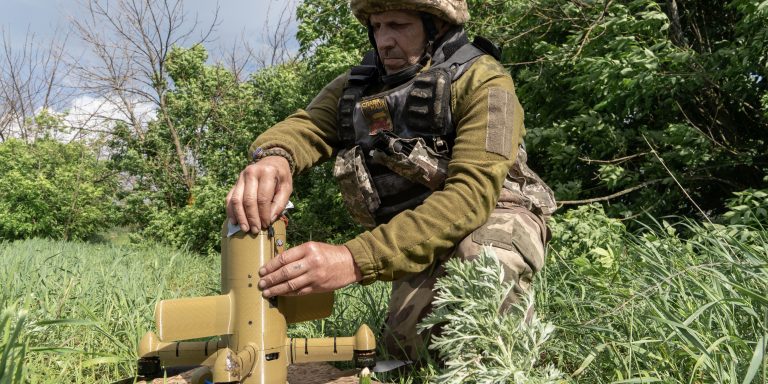
KN-Moscow, Institute for the Study of War (ISW) recently assessed that Russia’s slowing battlefield advances along with Ukraine’s reestablishment of the “overall drone advantage” may indicate an important turning point in the war, which if capitalized on could lead to a breakout from the current meat-grinding war of attrition that has characterized much of the battlefield since 2023. ISW noted that Russia’s daily rate of advance has fallen sharply in 2026, while Ukraine has, for the first time since its 2023 counteroffensive, begun to regain more ground than it lost during certain periods; it assesses that Russian forces suffered a net loss of 116 square kilometers in April 2026, while Ukrainian President Volodymyr Zelenskyy recently claimed that Ukraine has retaken nearly 600 square kilometers of territory this year, though Reuters could not independently verify that figure.
Yesterday, Ukrainian commander, Brigadier General Andriy Biletsky, told Reuters in an exclusive interview that he also believed Ukraine to be approaching an important turning point, arguing that the country has a “six-month window” to gain the upper hand on the battlefield and improve its negotiating position in future peace talks with Russia, which has stalled over disagreements over control of the Donbas region, as well as issues regarding U.S. and NATO security guarantees to Ukraine.

This shift on the battlefield has been enabled by a variety of factors; it is due in part to Ukraine’s increasingly aggressive drone campaign, bolstered by impressive technological innovation, as well as in part to SpaceX’s decision in February to cut off access to Russian forces, neutralizing Russian counter-drone capabilities. The Russian military had reportedly been using unauthorized terminals of this satellite internet system owned by Elon Musk to communicate and support drone activity in occupied Ukrainian territory. In February, Ukraine worked with SpaceX to deactivate these terminals while preserving access for approved Ukrainian devices through a whitelist system. Moscow’s inability to use this system on the frontline added another layer of pressure, complicating Russian battlefield communications and forcing some Russian drone operators to use more visible antennas that Ukrainian forces could more easily locate and strike. Nevertheless, while both Biletsky and analysts at ISW acknowledge the significant opportunity created by recent battlefield shifts, they also caution that it remains to be seen whether Kyiv can successfully capitalize on it alone.
Russia has also recognized this window of opportunity for Ukraine and has therefore adapted its own pressure campaign against Ukraine’s cities and air defenses. Even as Ukraine has improved its ability to blunt Russian drone attacks, the Kremlin has increasingly relied on larger, more complex strike packages that combine ballistic missiles, cruise missiles, drones, decoys, and different flight patterns designed to overwhelm Ukrainian defenses. Over the weekend, Moscow launched nearly 600 drones and 90 missiles, most of them aimed at Kyiv, while also warning foreign citizens and diplomatic staff to leave the capital “as soon as possible.” Ukraine has developed stronger domestic tools to respond to attacks like this, including layered defenses made up of interceptor drones, electronic warfare systems, helicopters, surface-to-air missiles, and mobile fire teams armed with heavy machine guns. Kyiv has also advanced homegrown systems such as Lima, an electronic warfare system designed to spoof satellite navigation and send incoming missiles off course, while the Ukrainian defense firm Fire Point says it plans to field a cheaper alternative to U.S.-made Patriot systems before the end of 2026.
Still, Ukraine remains heavily dependent on its partners for the most critical capabilities, especially U.S.-made Patriot interceptors, which remain its only effective means of intercepting Russian ballistic missiles. Some of that support can be routed through the North Atlantic Treaty Organization (NATO) or European-funded purchase mechanisms, but the underlying bottleneck is still largely tied to U.S. production, allocation, and governmental approval. Just yesterday, Ukrainian President Volodymyr Zelensky appealed directly to U.S. President Donald Trump and Congress in a letter asking for more air defenses, warning that current Patriot delivery rates are not keeping pace with Russia’s ballistic missile threat and that they are the Kremlin’s “last major advantage on the battlefield.” But the U.S. conflict with Iran has further diverted the already drawn-back weapons and missile supply from Ukraine to the Middle East.
Since Trump took office in January 2024, he has clashed with his Ukrainian counterpart, culminating once in a tense exchange in the White House during a February 2025 discussion over security guarantees between Zelenskyy, Trump, and U.S. Vice President JD Vance. Trump has also indicated he views the Russia-Ukraine war as a European problem, rather than an American one. At the same time, he has repeatedly made clear that he wants Europe to assume far greater responsibility for its own security. This is particularly salient as the U.S.-European strategic partnership has faced multiple strains in recent months, including divides over Ukraine support, NATO burden-sharing, Trump’s push for U.S. control over Greenland, and European reluctance to support U.S. military operations during the conflict with Iran. The U.S. has reportedly pushed European NATO members to take over the majority of the alliance’s conventional defense capabilities by 2027, while also moving to reduce the number of U.S. forces available to NATO in a crisis.
Trump’s view that Russia’s war in Ukraine is a European concern will likely negatively impact his willingness to bolster Kyiv’s supply of Patriot systems or substantially increase weapons and financial support to Ukraine. That is especially true as the conflict with Iran continues to demand the administration’s attention, U.S. troops remain exposed in the region, and the same air-defense systems Ukraine has also been in high demand in the Middle East since Operation Epic Fury. Trump is right that Iran represents a more immediate threat to U.S. forces and interests in the Middle East. But the administration risks underestimating the scale of the Russian threat, which remains Europe’s most pressing security challenge and one with direct implications for the United States. Russia’s threat is not limited to the battlefield in Ukraine. It also includes hybrid activity across Europe, including cyberattacks, disinformation campaigns, sabotage, infrastructure targeting, drone incidents, and intelligence operations designed to weaken democratic systems, social cohesion, and military readiness. NATO’s top commander has warned that the alliance must be prepared to respond to rising hybrid threats. This has become especially troubling as Iran has begun to adopt many of Russia’s hybrid tactics in its own operations in Europe, which have been plaguing the continent for months.
Although there are some fractures in the U.S.-European relationship that have been exacerbated by Russia’s war in Ukraine, European security remains deeply connected to U.S. security. The United States and its European partners often share overlapping foreign-policy goals, intelligence networks, military infrastructure, and diplomatic leverage, all of which help sustain American influence on the world stage. A weak or embattled Europe will have direct security and economic implications for the U.S. If Moscow achieves its goals in Ukraine, it will likely be emboldened to apply greater pressure on other European and NATO states, whether through military intimidation, hybrid operations, or probing of borders, airspace, and infrastructure. Countries in proximity to Russia, such as Poland, Estonia, Finland, Latvia, and Lithuania, have already had to contend with these types of operations.
While Ukraine has the ability to capitalize on some of its advantages to experience a dramatic turning point in the conflict with Russia, successful utilization of this moment would require further support from its European partners, but especially from the U.S. Without it, Ukraine will likely struggle to turn its tactical innovations — especially its battle-tested drone and counter-drone capabilities — into a sustained battlefield advantage before Russia adapts. Ukraine has become notorious since Russia’s full-scale invasion for its ability to innovate and adapt under pressure. However, its notoriety for drone innovation is paralleled by Russia’s own ability to adapt its systems to counteract Ukrainian advancements, largely contributing to the attritional nature of the Russia-Ukraine war so far. That makes outside support in Ukraine’s weaker areas, particularly air and missile defense, a key factor in whether Kyiv can sustain and capitalize on its current momentum (TheSoufanCenter)
Photo:AP Photo/Andrii Marienko)


 Glembert