admin
admin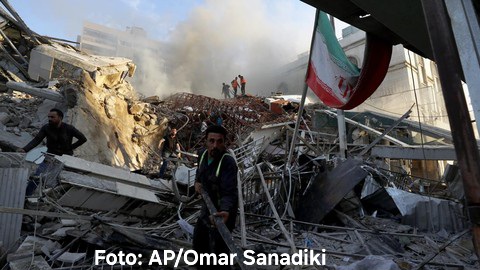
KN-TEHRAN, The conflict has expanded beyond direct military exchanges and conventional strikes and into a regional conflict spanning leadership decapitation strikes, internal destabilization efforts, pressure on maritime chokepoints, attacks or threats to energy infrastructure, and economic coercion. Iran has also broadened its attacks on U.S. interests across the region, targeting diplomatic facilities including the U.S. Embassy in Riyadh, the U.S. Embassy in Kuwait, and the U.S. Consulate in Dubai. In response, the United States has begun shutting down or suspending operations at several embassies across the region.
As Israel and the United States continue coordinated strikes inside Iran, their operations appear focused on targeting Iranian security and domestic control infrastructure, ballistic missile systems, senior leadership and elements of Iran’s nuclear infrastructure.
Strikes launched on the first day of the joint military operation killed several senior figures in Iran’s leadership, including the Supreme Leader, the commander of the Islamic Revolutionary Guard Corps (IRGC), and the defense minister. Subsequent waves have included key elements of Iran’s political leadership, reportedly striking the presidential office and the Supreme National Security Council building.
The Israeli Air Force reportedly struck a building in the holy city of Qom hosting the Assembly of Experts — the body constitutionally responsible for selecting Iran’s next Supreme Leader. The strike may have been intended to disrupt the leadership succession process; however, the extent of the damage and any casualties among clerical members remain unclear, though some reports suggest a high casualty count involving dozens of senior members of the regime.
The U.S. and Israel continued to target the regime militarily, including missile sites, naval assets, and internal security facilities, including IRGC and Basij bases and police stations. To date, the targeting pattern suggests a phased strategy. The initial phase appears to have focused on decapitating senior leadership, disrupting centralized command-and-control structures, and degrading Iran’s missile and naval capabilities to limit its ability to retaliate or project force regionally. The second phase seems aimed at weakening the regime’s grip on power — particularly in peripheral regions and border areas — by exploiting internal vulnerabilities and creating conditions for instability or fragmentation. A potential third phase could involve direct or indirect support for militant or ethnically-based opposition groups, enabling them to uprise and infiltrate across borders in order to intensify internal pressure on the regime.
Some analysts assess that Israel may be more tolerant of territorial fragmentation inside Iran if regime replacement proves impossible. In this scenario, Kurdish groups in the northwest, alongside Sunni Arab and Baloch communities in the south and southeast, could contribute to a gradual fragmentation of the Iranian state — similar to the Syrian model that produced a civil war and ultimately led to the downfall of Bashar al-Assad.
The Wall Street Journal reported that U.S. President Donald Trump has already held discussions with Kurdish groups that could potentially exploit the current instability and initiate uprisings in certain regions of Iran. According to CNN, multiple sources familiar with the situation claim that the CIA is working to arm Kurdish forces to spawn a popular uprising.
However, in comments to Politico, President Trump suggested a willingness to keep diplomatic channels with Iran open, even amid ongoing military and political upheaval. His remarks indicated he would be open to engaging with a reconstituted regime government should one emerge from the conflict. When asked whether it was too late to consider working with new leadership in Tehran, he responded: “Nope, not too late. Forty-nine senior Iranian leaders were killed — that goes pretty deep, right? New ones are emerging. A lot of people want the job. Some of them would be very good.”
Recently, Iranian media has reported that Ali Khamenei left no written guidance regarding who should succeed him as Supreme Leader. Some regional experts suggest that this may serve to legitimize the possible succession of Mojtaba Khamenei, the son of the previous Supreme Leader. Hereditary transfer of power is taboo in the Iranian political system, so narrativizing the succession as purely a decision by Iran’s Assembly of Experts may help to pave the way for the Mojtaba Khamenei.
Despite the lack of clarity regarding succession, Iran continues to launch missile and drone attacks against Israeli targets and U.S. military bases and assets across the region. Although in recent days, it appears Iran has reduced the volume of missiles it has launched. Sustained U.S. and Israeli targeting of Iran’s ballistic missile infrastructure may have constrained Tehran’s immediate launch capacity. However, Iran’s reduced missile-launch tempo may be by design, as Tehran has historically demonstrated a preference for protracted, attritional conflicts. Therefore, Tehran may intend to prolong the conflict while imposing steady defensive costs on the United States and Israel. This approach mirrors elements of the strategy Iran employed during 12-Day War, where sustained but measured attacks were used to stretch defensive systems and test interception thresholds.
Tehran has also continued its attempt to broaden the conflict into the economic domain by disrupting shipping, energy flows, aviation routes, and industrial output. The economic repercussions of targeting regional energy infrastructure are continuing to materialize. Iraq halted production at the Rumaila Oil Field — its largest — and reduced output at West Qurna-2 by approximately 460,000 barrels per day. The Kurdistan Regional Government reportedly suspended oil exports through the Turkish port of Ceyhan. Qatar also reduced certain chemical production activities in the Mesaieed Industrial Area.
The Iranian leadership, however, appears to be operating under the conviction that states that host U.S. forces or facilitate what Tehran perceives as American military objectives cannot remain insulated from the consequences of conflict. Along with attacking critical energy infrastructure, Iran continues to strike U.S. military installations and other civilian targets in Gulf states. Iranian attacks on Gulf states are generating significant hostility across the region, including from countries that have traditionally played the role of mediators between Iran and its adversaries, particularly Qatar and Oman. Qatar’s Ministry of Foreign Affairs issued an unusually strong condemnation of Iranian strikes targeting civilian infrastructure, warning that such attacks had crossed “every red line.” Qatari authorities also announced the arrest of two cells — comprising approximately ten individuals — operating on behalf of Iran’s Islamic Revolutionary Guard Corps and tasked with carrying out destabilizing activities inside the country. These developments are likely to further erode the already fragile diplomatic space in the Gulf and deepen regional perceptions of Iranian aggression, potentially constraining Tehran’s ability to maintain influence and relationships across the region.
The conflict is also showing the potential for regional expansion as Pakistan has reportedly cautioned Tehran to weigh Islamabad’s defense understandings with Saudi Arabia before considering any strike on Saudi territory — an indication that even indirect escalation could trigger broader interstate consequences. In Lebanon, Hezbollah announced its involvement in retaliation for the killing of Iran’s Supreme Leader, prompting an unpreceded move by the Lebanese government to declare Hezbollah’s military wing illegal and demanding it handover its weapons after launching missiles into northern Israel. Iraqi militia groups, including Kataib Hezbollah, have claimed responsibility for attacks targeting U.S. interests in Kuwait and Saudi Arabia, while the Houthis in Yemen have declared support for Iran and Hezbollah, but have so far stopped short of detailing operational plans. However, there is limited evidence thus far of broad-based domestic support in these countries for deeper involvement in the war.
The war is evolving into a contest of endurance where all involved parties are operating against the clock. Israel and the United States seek to degrade Iranian military capacity before Tehran can broaden the conflict or stabilize internally, while Iran, fully aware it cannot win a conventional war against the U.S. and Israel, is attempting to prolong its war of attrition. The central question is no longer simply who strikes harder, but who reaches their breaking point first.
Photo: Ilustration, source: AP/Omar Sanadiki


 Glembert