admin
admin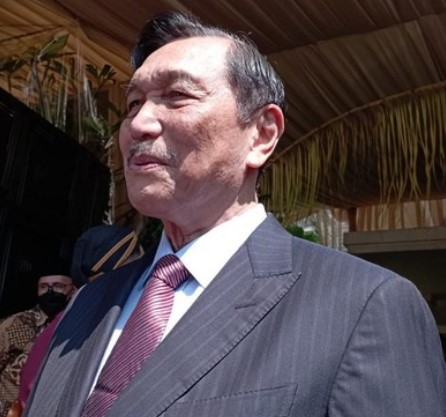
KN, National Economic Council (DEN) Chair Luhut Binsar Pandjaitan said the Indonesian government needs to be aware of the impact of U.S. protectionist policies after Donald Trump’s victory in the presidential election. He is worried that protectionist policies would strengthen the U.S. dollar and weaken the rupiah. He said the existence of the U.S. Department of Government Efficiency (DOGE) reflects Trump’s determination to cut unnecessary things from his government. According to him, Indonesia must play nicely with the United States in order to prepare for this.
Luhut stressed the importance of careful consideration by the Indonesian government regarding U.S. policies affecting sectors such as renewable energy and import tariffs. Luhut also pointed out the strong relationship between Prabowo and Trump, expressing optimism that Trump’s leadership would not negatively affect Indonesia.
Deputy Industry Minister Faisol Riza said that the import duty policy proposed by U.S. President-elect Donald Trump has triggered shifts in the global economy, particularly in trade with China.
Faisol said the Ministry has received numerous meeting requests from Chinese companies since Trump’s victory. “We suspect that they think it is better to move their industry to countries in the Southeast Asian region, enabling direct exports to the U.S.,” Faisol said during a discussion event held by INDEF.
Indonesia is bracing for the possibility of a tidal wave of cheap Chinese imports following Trump’s plans to raise tariffs on Beijing-made goods. Deputy Trade Minister Dyah Roro Esti Widya Putri at the Conference on Indonesian Foreign Policy (CIFP) in Jakarta said that the government would seek strategies to protect the domestic market.
U.S.-ASEAN Business Council President and CEO Ted Osius in his remarks at a meeting with President Prabowo Subianto at the State Palace expressed his commitment to partnering with Indonesia in supporting Prabowo’s Asta Cita (eight visions) program. “We are committed to being your resource and partner to realizing the Asta Cita vision and to supporting your priority programs, the initial programs that you have set, and 17 missions for Indonesia,” Osius said.
During his visit, he brought along 50 leaders of U.S. companies who have committed to becoming partners in Indonesia. Osius and the U.S. entrepreneurs were accompanied by U.S. Ambassador to Indonesia Kamala Shirin Lakhdhir.
Indonesian President Prabowo’s leadership has further polished Indonesia’s investment appeal in the eyes of business actors from the United States, according to Indonesian Investment and Downstreaming Minister Rosan Roeslani.
Roeslani also attributed the increased trust among U.S. business players in Indonesia’s investment climate to the president’s recent visit to their country.
Furthermore, the minister spoke of having met with several U.S. entrepreneurs, noting that some have already placed capital in Indonesia. He affirmed that the business players look forward to further open and productive discussions to explore and seize more cooperation opportunities.
According to Muhammad Samsul Hadi and Laraswati Ariadne Anwar, one of Trump’s main agenda items that world leaders are keeping an eye on is the implementation of tariffs, including a threatened 100 percent tariff on BRICS members if they weaken the U.S. dollar through de-dollarization. “If the tariff reaches that level (100 percent), it is typically referred to as prohibitive. That means you cannot trade. If you have to spend twice as much to trade your goods, ‘economically it cannot be done,’” said Asia Society Policy Institute (ASPI) Vice President Wendy Cutler during the U.S.-ASEAN Reporter Tour Program in early November 2024.
Indonesia should keep an eye out for Trump’s warning, whether it was a bluff or a real threat. However, Cutler said that Indonesia possesses significant capital. “Indonesia is a place where there are many important minerals and other important metal materials. “This is an area where we (in the United States) want to reduce our reliance on China,” she said.
Trump’s “America First” policy suggests an era of heightened trade wars, a potential unraveling of multilateral agreements and a retraction of US commitments to and engagement with Southeast Asia. Trump’s combative approach toward China will require SE Asian nations to recalibrate their policy.
For Indonesia, the Trump presidency will present the challenge of balancing economic opportunities with the US and China without being drawn too far into the orbit of either. Trump’s isolationist approach, particularly his plans to impose high tariffs, means that trade relations with the US are likely to become more complex.
The Indonesian government has not yet received an invitation to attend the inauguration of U.S. President-elect Donald Trump, said Indonesian Foreign Ministry spokesperson Roy Soemirat responding to a written inquiry from RMOL. When asked who would be sent to attend the U.S. Presidential inauguration, the spokesperson said, “There has been no invitation from the U.S. government.” Trump reportedly had invited several world leaders to attend his inauguration next month, including Chinese President Xi Jinping and Hungarian Prime Minister Viktor Orbán.
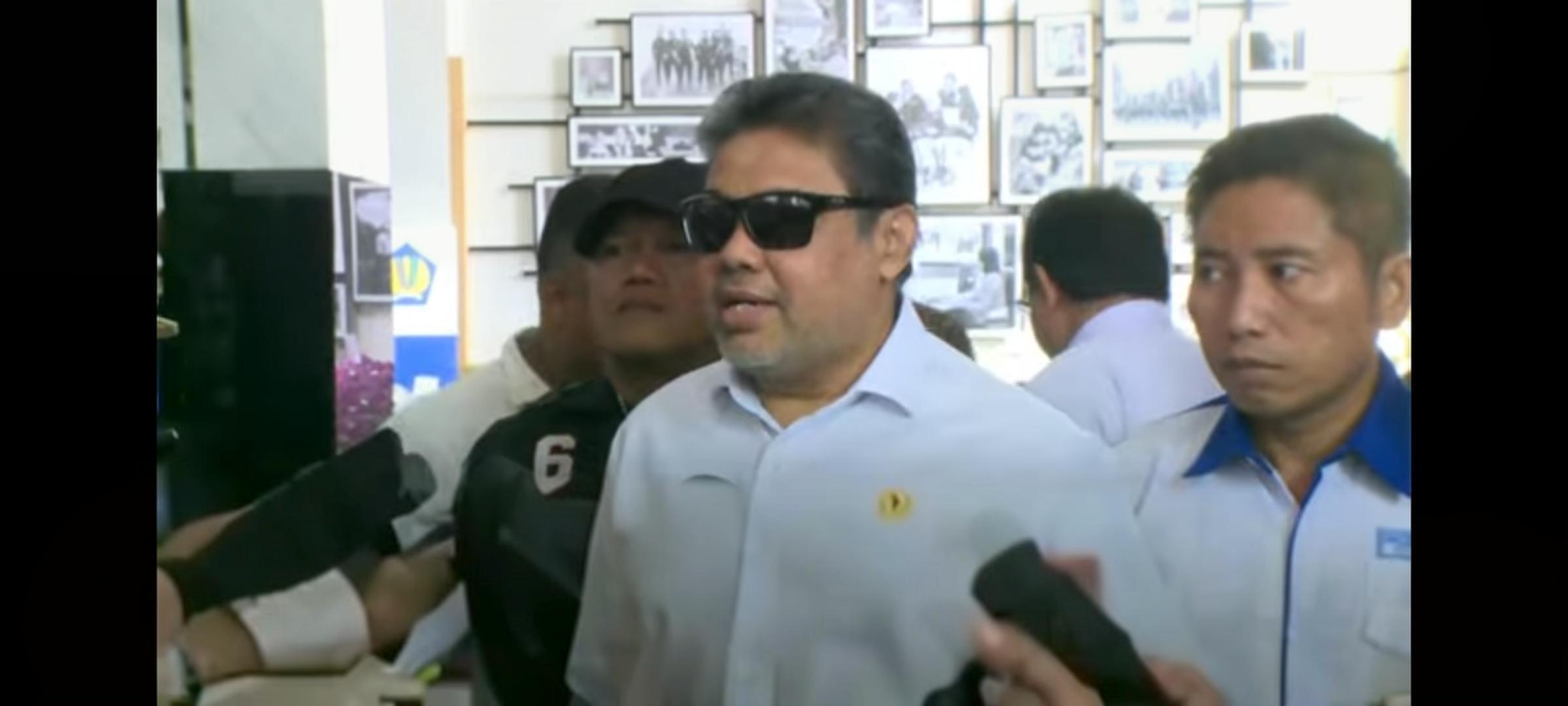
Photo: National Economic Council (DEN) Chair Luhut Binsar Pandjaitan, source: CNN.com

 Glembert