Glembert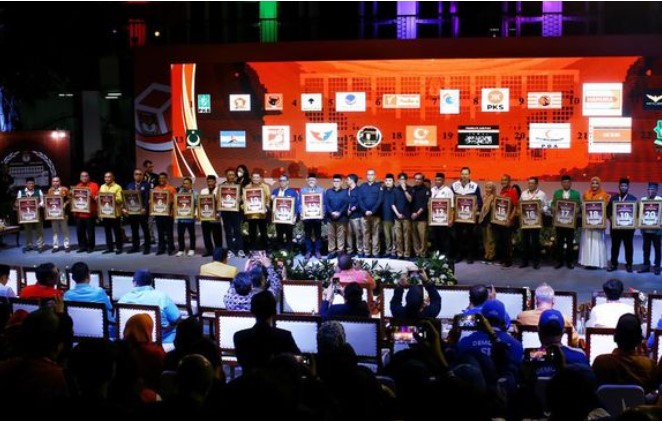
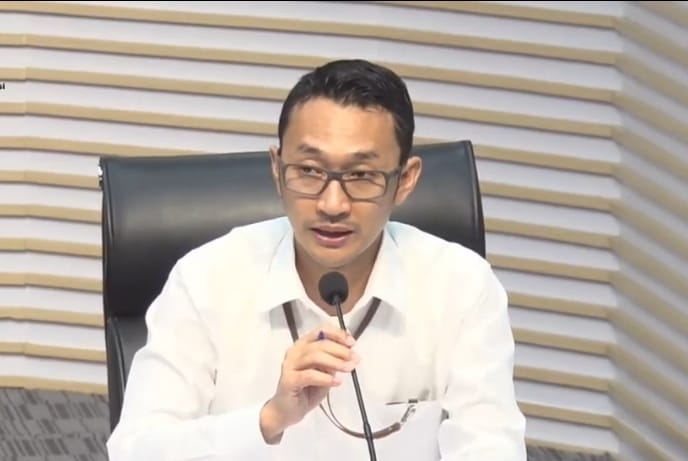
KN. Liam Gammon said Indonesia is now seeing a handover of political power far more stage-managed than ever before in its post-democratic history, as President Joko Widodo and Defence Minister Prabowo Subianto sustain the alliance that helped the former special forces general win an historic landslide in the February 2024 presidential elections by posing as Widodo’s natural heir.
Prabowo has locked in this dominance by building an unprecedentedly broad party coalition ahead of his inauguration on 20 October. All Indonesian presidents seek to minimise the prospect of pushback against their programs by forming party coalitions far bigger than required to simply pass legislation — but even before the election Prabowo openly flagged his ambitions to be the first president to build a governing coalition that encompasses all the parties represented in parliament.
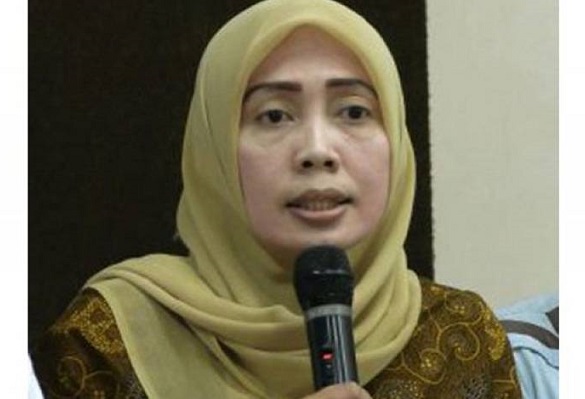
Nick Kuipers and Eve Warburton said ask the average Indonesian voter what they believe it takes to be a winning legislative candidate and you’re likely get the response: “harus punya duit”—“[they] must have money.” These voters’ intuitions are backed up by plenty of research showing that political campaigns in Indonesia are expensive—and that costs are on the rise. To stand a chance in any legislative election, would-be politicians must pay the salaries of sprawling campaign teams, purchase mountains of campaign paraphernalia, and hand out envelopes of cash to voters on election day. These costs can come to over US$50,000 for a candidate at the district or city level; for national parliament, political aspirants can spend upwards of US$2 million. Individual candidates, rather than their party, foot the bill, and failure to win office can lead to financial ruin. Given the obvious advantages that personal wealth affords a candidate in such a system, it is little surprise that business people and oligarchs are entering politics in growing numbers.
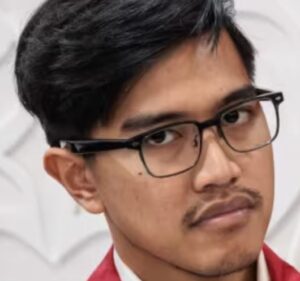
National Democrat (Nasdem) Party Chairman Surya Paloh has announced his full support for Indonesian Solidarity Party (PSI) leader Kaesang Pangarep in the 2024 Central Java governor election. This endorsement follows a recent survey indicating that President Jokowi’s son is highly electable.
The East Asia Forum Editorial Board said the orderly transition of power to a duly elected leader is a, if not the, hallmark of a well-functioning democracy. As if setting a template for Donald Trump to follow, Prabowo Subianto reacted to his loss in two straight presidential elections to Joko Widodo in 2014 and 2019 by declaring himself the victim of electoral fraud and refusing to accept the results. Now, Prabowo and Widodo, having reconciled after the 2019 elections, are jointly engineering a transition of power that many feel is a little too seamless to be healthy. As Liam Gammon details in this week’s lead article, Widodo is putting state money and technocratic energies behind some of Prabowo’s signature campaign promises, expecting in return that Prabowo will cooperate in dynasty-building in the local elections scheduled for November 2024.
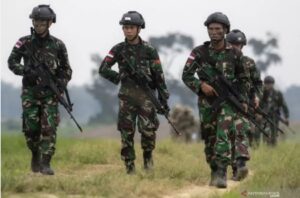
Make no mistake, President Jokowi’s move to green light a plan to revise the 2004 National Military (TNI) Law at the last opportunity before the transition of power is controversial in several ways. Civil society groups have flagged, for instance, a provision that would allow active TNI personnel to hold any position in government. Scholars seem to largely agree that military involvement in business is unprofessional and could threaten human security. We must decline the TNI’s request, lest we allow thuggery to run rampant in the commercial sphere and the fear of military intervention to dictate Indonesia’s development path. A decade of true civilian rule under Jokowi is too brief a period of control in the military-civilian struggle. With a retired army general poised to once again take the reins of the country, we will need to keep our guard up to avoid making any further unnecessary concessions.

The Indonesian Attorney General’s Office (AGO) and the Press Council aim to strengthen collaboration to protect journalists from violence and intimidation. At an AGO media gathering, Press Council Chair Ninik Rahayu reported 28 cases of violence against journalists in the first half of this year, including terror, intimidation, gender-based violence, physical violence, and digital attacks.
Digital attacks, especially through messaging apps targeting journalists covering corruption, were the most common. Rahayu emphasized the need for better state protection and called for higher-level regulations to address violence against journalists, upgrading the MoU between the Press Council and AGO to an Attorney General’s regulation and the MoU with the National Police to a POLRI Chief’s regulation.

Teuku Faizasyah, Indonesian Ambassador to Norway and Iceland, in my opinion however, there are three foreign policy issues that have President Jokowi’s strong signature and can therefore be claimed as his legacy. […] I have outlined the three foreign policy legacies of President Jokowi that can be enhanced further. First is by setting aside proceeds from critical minerals downstreaming into a sovereign wealth fund. Indonesia’s future generations should also benefit from the finite natural resources being extracted today. Second is by maximizing the use of processed commodities for domestic consumption, such as absorbing more biofuels made from palm oil. This is in anticipation of more unilateral regulations like the EUDR. As a final thought, as with other nations, Indonesia will continue to face streams of global challenges and new strategic issues. How we respond to these and define our foreign policy posture will very much depend on clarity in translating our national interests.

 admin
admin